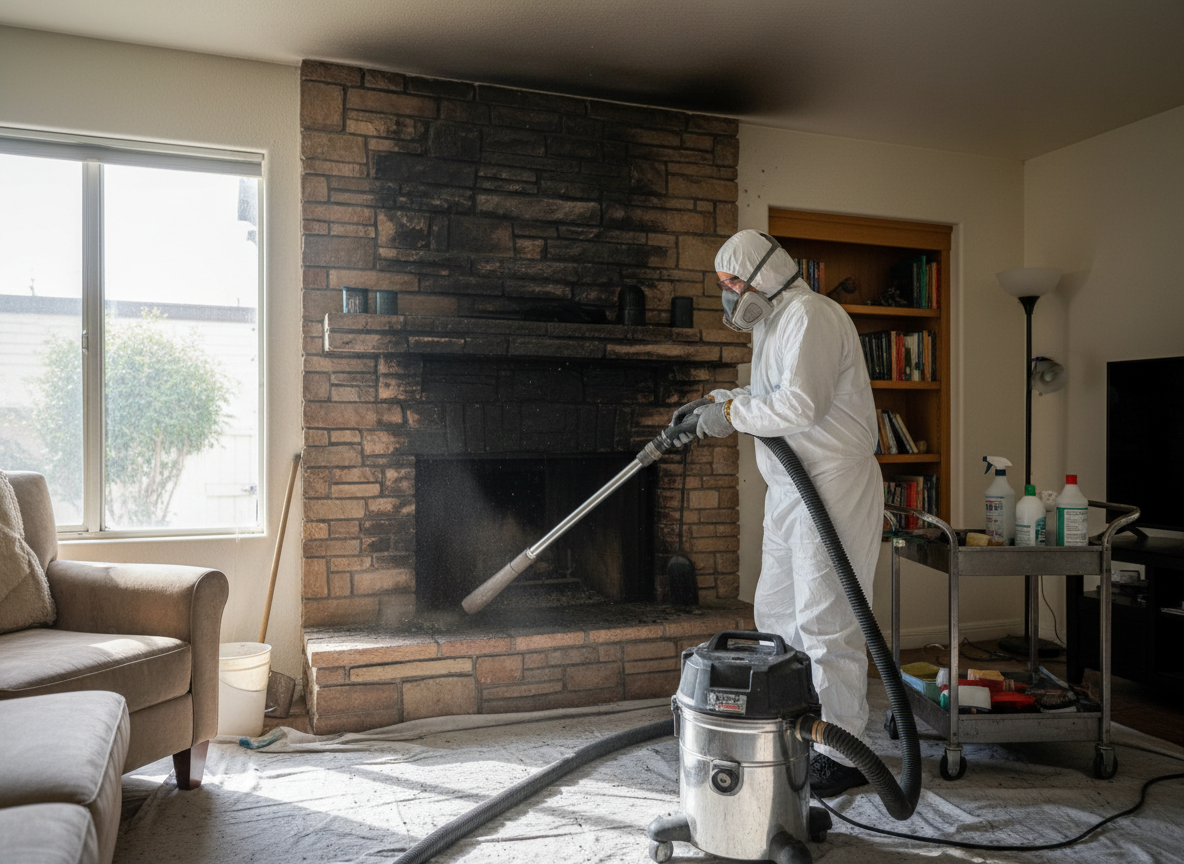
Soot from structure fires in Valley Village settles into porous materials like drywall and insulation common in mid-century homes around Valley Village Park. The Mediterranean climate with warm dry summers leaves residues airborne longer, allowing them to penetrate HVAC systems and reach neighboring properties in North Hollywood West. Acidic particles corrode metal fixtures and electronics if not neutralized within days, and crews must use HEPA filtration to avoid redistributing fine particles into adjacent rooms.
Technicians test surfaces for pH levels before applying alkaline cleaners, especially on wood trim and concrete slabs found in older Sherman Oaks-adjacent properties. Dry winter winds can re-suspend settled soot, requiring repeated passes with specialized vacuums. In Los Angeles County homes, crews often discover soot trapped behind baseboards where older construction lacks modern vapor barriers, demanding targeted disassembly rather than surface wiping alone.
Odor neutralization follows physical removal because smoke oils bond to fabrics and carpets in Studio City rentals. Encapsulating sealers are applied only after verification that all residues are gone, preventing future off-gassing when temperatures rise. Local operators at 12125 Riverside Dr respond 24/7 because rapid intervention limits secondary damage in the dry air that accelerates corrosion on copper wiring.
Technician insight
In Valley Village the thing that catches most people out with soot removal is how the dry summer air lets fine particles travel through the gaps in 1950s lath-and-plaster walls common around North Hollywood West, so a job that looks limited to one room often turns into full-home cleaning once you open the cavities.
Soot in a Valley Village Park home
Smoke from a kitchen fire migrated through the attic of a 1960s house near Valley Village Park. We found acidic soot coating insulation and wiring runs that standard wiping would have missed. Targeted vacuuming followed by neutralization cleared the residues without disturbing the original plaster, and the homeowners returned within four days.
How it works
- 1
Initial Assessment
Inspect all affected rooms and test surfaces for soot depth and pH to map hidden migration paths in older Valley Village construction.
- 2
Containment Setup
Seal HVAC intakes and doorways with plastic sheeting to prevent cross-contamination into unaffected areas near Laurel Canyon Park.
- 3
Dry Removal
Use HEPA vacuums and brushes to lift loose particles from walls, ceilings, and contents before any liquid cleaning begins.
- 4
Chemical Neutralization
Apply pH-adjusted solutions to dissolve bonded residues on hard surfaces and fabrics while monitoring for material compatibility.
- 5
Final Verification
Re-test surfaces and run air scrubbers until odor and particle counts meet clearance standards for safe re-occupancy.
Pricing
Cost depends on square footage affected, number of rooms, and whether HVAC systems require cleaning.