Smoke odor in Valley Village homes often settles into the stucco exteriors and older plaster interiors common around Valley Village Park and North Hollywood West. Mediterranean climate summers with low humidity let residues dry deep into porous materials before homeowners notice, while mild winters keep windows closed and trap smells indoors. Proper removal requires identifying every affected layer rather than masking odors with sprays that fail once humidity returns.
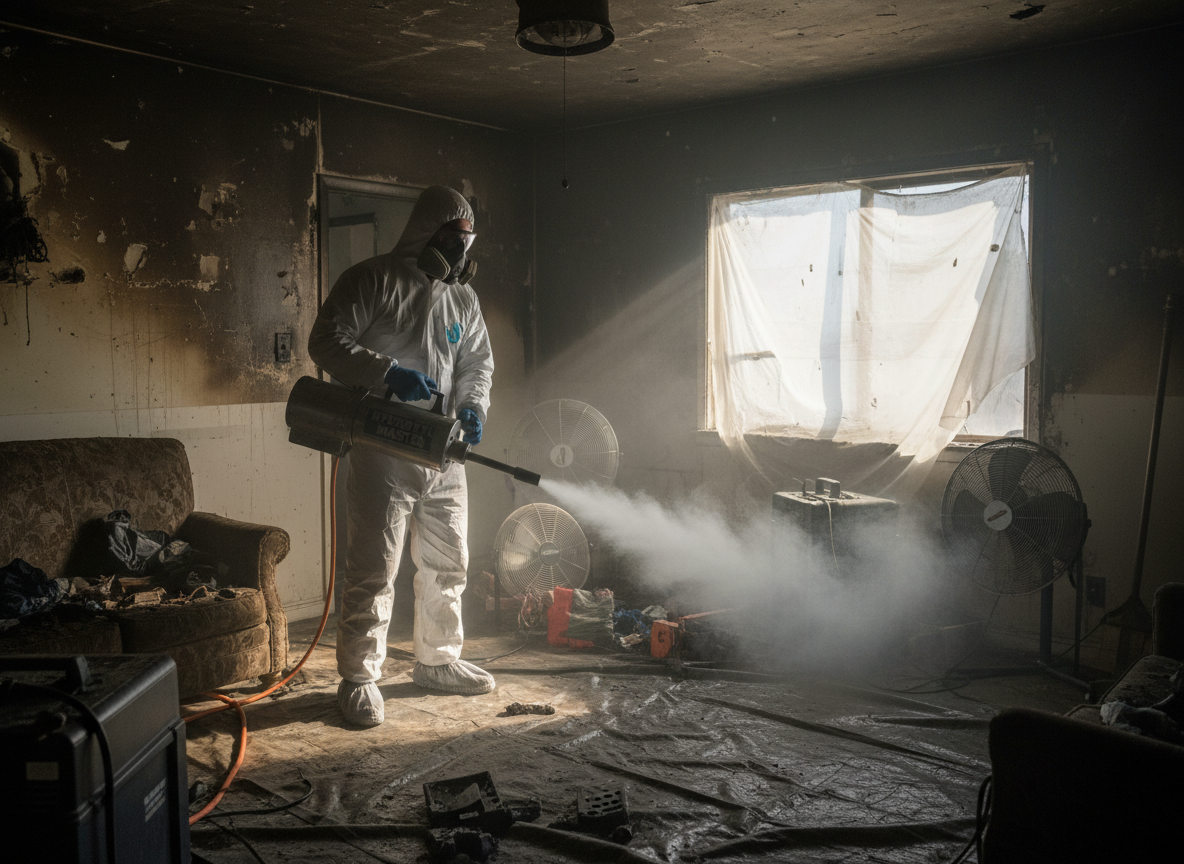
Technicians start by mapping odor paths through attics, HVAC ducts, and wall cavities that are typical in 1950s-1970s ranch houses near Laurel Canyon Park. Thermal fogging and hydroxyl generators reach behind cabinets and under subfloors where soot particles embed. In Los Angeles County, failure to pull permits for drywall removal can delay insurance claims, so crews document every step with photos and moisture readings before sealing surfaces.
Edge cases include odor reappearing after power is restored and fans move air through previously untouched spaces. Concrete slabs in Sherman Oaks homes can hold odors from melted plastics that seep downward, requiring concrete etching rather than simple cleaning. Owners who attempt DIY ozone machines often damage electronics and fabrics without eliminating the source, leading to repeat calls once the first rain of the season raises indoor humidity.
Common Odor Sources After Fires
Residue from synthetic furnishings, insulation, and wiring creates distinct chemical smells that standard cleaning misses in Valley Village stock. ## When Odor Returns Reappearance usually traces to missed pockets in crawl spaces or behind built-in cabinetry typical of the neighborhood.
Technician insight
In Valley Village, the thing that catches most people out with Odor removal after fire is how smoke travels through the shared walls and attics of 1960s tract homes near Valley Village Park during the dry summer months, then reappears once the first winter rain raises humidity.
Smoke in North Hollywood West Duplex
A kitchen fire in a 1965 duplex near North Hollywood West sent smoke through shared attic space into the neighboring unit. We found residue inside HVAC returns and behind original plaster. After source removal and hydroxyl treatment, odors cleared and the owner moved back in without further complaints.
How it works
- 1
Initial Assessment
Inspect all affected rooms, HVAC, and hidden cavities to locate odor sources.
- 2
Source Removal
Remove charred materials and clean surfaces before any odor treatment begins.
- 3
Odor Neutralization
Apply thermal fogging or hydroxyl treatment to penetrate porous materials.
- 4
Verification
Test air quality and surfaces after treatment to confirm odors are gone.
Pricing
Pricing depends on square footage affected and materials involved; upfront quotes provided after inspection.