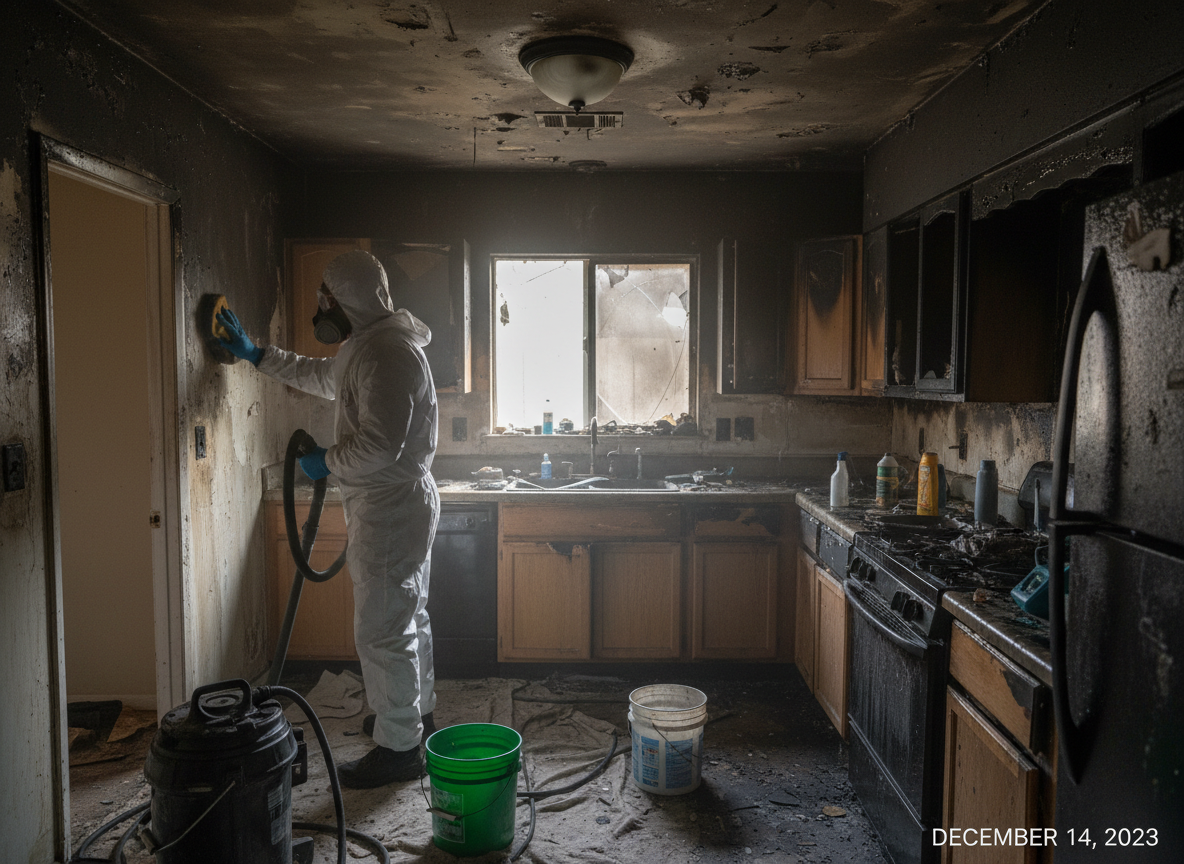
In Valley Village's Mediterranean climate, smoke from fires settles into older single-family homes with stucco exteriors and wood framing common along Riverside Drive and near Laurel Canyon Park. Dry summer air lets particulates travel farther into attics and HVAC systems before moisture from occasional winter rains sets them into drywall and insulation. Restoration crews must test for acidic residues that corrode copper wiring and HVAC coils faster here than in inland areas.
North Hollywood West and adjacent Studio City properties often share mid-century construction with narrow crawl spaces that trap smoke odors in insulation and subflooring. Technicians remove affected materials rather than relying on ozone alone because the mild winters limit natural ventilation through closed windows. Proper sealing of shared walls between neighboring homes prevents cross-contamination during treatment.
Los Angeles building codes require permits for any structural material removal after smoke events, especially when work touches electrical or plumbing lines common in Valley Village homes built before 1970. Crews document hidden damage behind cabinets and under carpet pads to satisfy insurance adjusters who visit from Sherman Oaks offices.
Technician insight
In Valley Village, the thing that catches most people out with smoke damage restoration is how quickly residues from dry summer fires embed in the original 1950s plaster walls and shared attics along Riverside Drive; homeowners often try surface cleaning first and then discover the odor returns after the first winter rain because the acid has already reached the lath.
Attic Smoke in North Hollywood West Home
Smoke from a kitchen fire migrated upward through an open chase in a 1960s Valley Village house near Valley Village Park. Inspection found heavy soot on rafters and inside HVAC ducts that had been running during the event. Crews removed contaminated insulation, cleaned ducts with HEPA equipment, and sealed the chase before reinstalling new insulation.
How it works
- 1
Initial Assessment
Technicians arrive from the Riverside Drive location and inspect all affected rooms plus HVAC pathways for smoke residue depth.
- 2
Containment Setup
Plastic barriers and negative air machines isolate rooms to stop particulates from spreading into unaffected areas like garages or second floors.
- 3
Residue Removal
Specialized cleaners address acidic soot on surfaces while removing porous items such as carpet and drywall that cannot be restored.
- 4
Odor Neutralization
Thermal fogging and air scrubbers treat remaining odors trapped in wood framing and attic insulation typical of local homes.
- 5
Final Clearance
Independent testing confirms residue levels meet standards before homeowners return, with documentation provided for insurance.
Pricing
Costs depend on square footage affected, depth of smoke penetration into insulation, and whether HVAC cleaning is required.