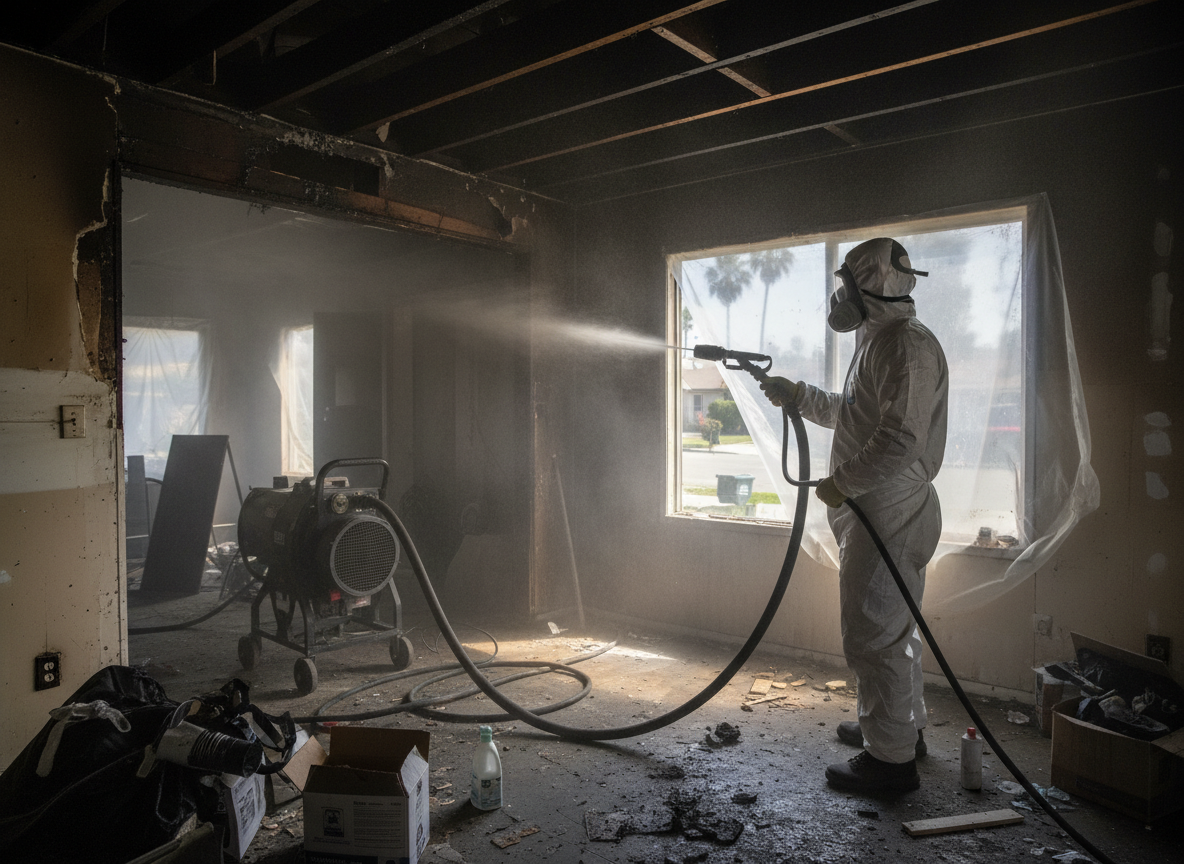
Smoke remediation in Valley Village begins with identifying how Mediterranean climate conditions allow fine soot to embed in the stucco exteriors and older plaster walls typical of homes built near Valley Village Park. Dry summer air pulls particles deep into HVAC ducts and attic insulation common in the area's mid-century housing stock, requiring HEPA filtration and negative air machines to prevent migration into North Hollywood West. Technicians test surfaces with specialized meters before applying pH-neutral cleaners that avoid damaging original wood trim or lath-and-plaster finishes.
Edge cases arise when smoke travels through shared walls in neighborhoods bordering Sherman Oaks, where mild winters keep windows closed longer and trap odors inside. Porous materials like carpet padding and drywall in these properties demand removal rather than surface cleaning to meet Los Angeles County air quality expectations. Crews isolate affected zones early to protect Laurel Canyon Park-adjacent properties from cross-contamination during the dry season when wind can carry particles.
Regulation notes include confirming proper disposal of contaminated debris at approved Los Angeles facilities and documenting every step for insurance adjusters familiar with Valley Village claims. Homeowners should avoid running HVAC systems until clearance testing confirms safe particle levels, as residual smoke can re-circulate through the same ductwork that first spread it.
Technician insight
In Valley Village, the thing that catches most people out with Smoke remediation is how the dry summer air lets soot travel through the original lath-and-plaster walls and shared attics around Valley Village Park, turning a kitchen fire into whole-house contamination before homeowners notice.
Kitchen Fire Smoke Migration
A cooking fire in a Valley Village home sent smoke through the HVAC into bedrooms and the attic. Inspection revealed soot embedded in insulation and ductwork typical of homes near Laurel Canyon Park. Crews contained the zone, cleaned all surfaces, and neutralized odors in the ducts. The family returned after clearance testing showed safe particle levels.
How it works
- 1
Initial Assessment
Technicians inspect all rooms, test surfaces, and map smoke migration paths through the home's HVAC and attic spaces.
- 2
Containment Setup
Plastic barriers and negative air machines isolate the work zone to stop soot from reaching unaffected areas like those near North Hollywood West.
- 3
Soot Removal
HEPA vacuums and specialized cleaners remove residues from walls, ceilings, and contents without damaging older Valley Village finishes.
- 4
Odor Neutralization
Thermal fogging and ozone treatments address embedded smells in insulation and porous materials common in local homes.
- 5
Final Clearance
Air quality testing and visual inspection confirm the property meets safe standards before reoccupancy.
Pricing
Pricing depends on the square footage affected, depth of soot penetration into older construction materials, and whether HVAC systems require full cleaning.