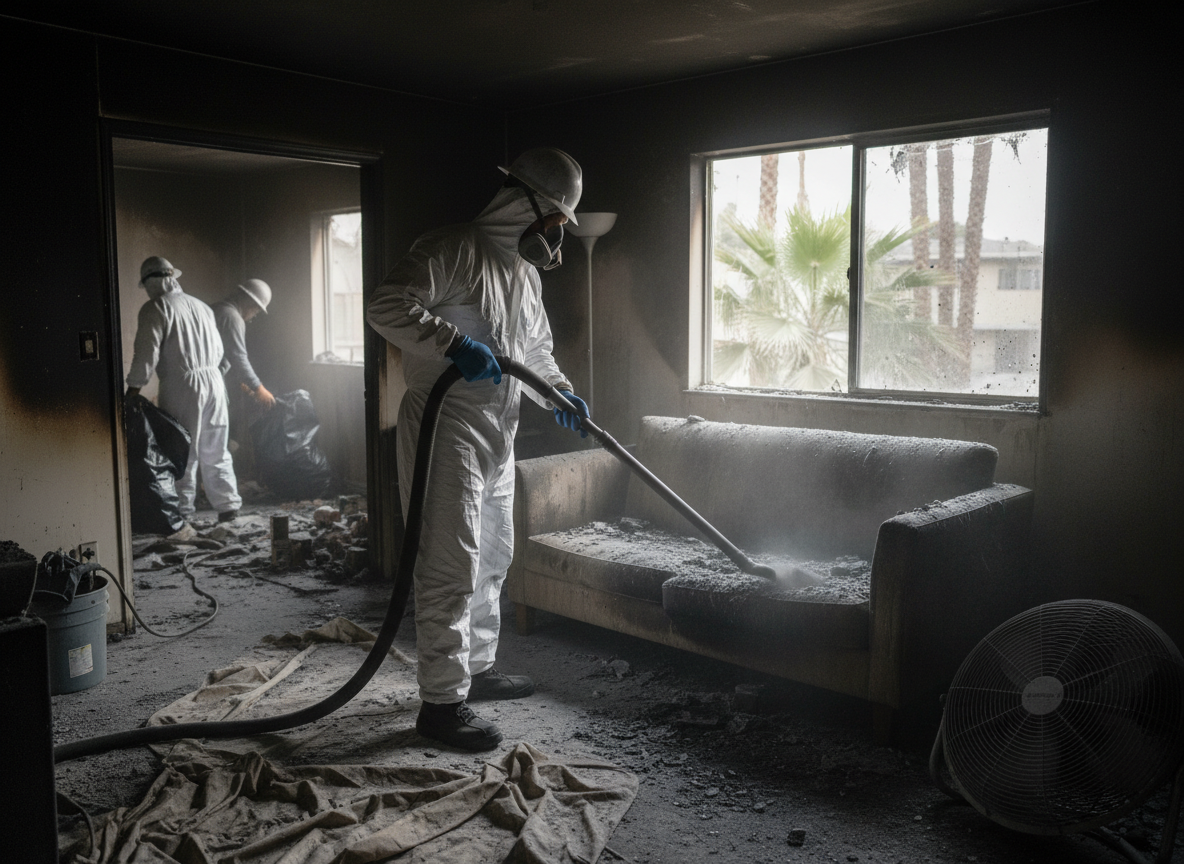
Tenant fire damage cleanup in Valley Village requires careful attention to how smoke moves through the dense housing stock near Valley Village Park and North Hollywood West. Mediterranean climate summers leave properties bone-dry, allowing soot to embed deeply into drywall, carpet, and HVAC systems common in homes built before the 1980s. Crews must separate tenant belongings from structural elements while following Los Angeles County habitability rules that protect renters during restoration.
Work near Laurel Canyon Park often involves properties on sloped terrain where fire and water runoff create hidden moisture pockets under flooring. Dry winters mean less natural dilution of odors, so technicians use targeted air scrubbing and thermal fogging to reach crevices in single-wall construction typical of the area. Coordination with landlords in Studio City and Sherman Oaks ensures tenant units are returned to code without shifting costs improperly.
Edge cases include shared walls in multi-unit buildings along Riverside Drive where smoke migrates to neighboring units. Cleanup teams document pre-existing wear from the mild winters so tenants are not held responsible for unrelated issues. Proper disposal of charred materials follows local landfill rules that differ from surrounding cities.
Final clearance testing focuses on air quality in enclosed spaces that retain heat longer in the warm dry season. This prevents recontamination when tenants move back in after repairs.
Technician insight
In Valley Village, the thing that catches most people out with tenant fire damage cleanup is how smoke travels through the single-wall construction in homes near Valley Village Park during our dry summers, leaving residue in wall cavities that standard wipes miss and forcing extra demolition when winter humidity finally arrives.
Kitchen fire in North Hollywood West rental
A cooking fire in a Valley Village apartment spread soot through the HVAC and into bedrooms. We found heavy residue inside the older ductwork and under baseboards typical of the area's 1960s builds. Containment, HEPA cleaning, and fogging cleared the unit without displacing the tenant long-term, restoring habitability within the week.
How it works
- 1
Initial Assessment
Technicians inspect the unit for smoke paths, water intrusion from suppression, and affected tenant items while documenting conditions specific to Valley Village construction.
- 2
Containment and Safety
Plastic barriers and negative air machines isolate the space to stop soot spread into unaffected rooms or neighboring units common in the neighborhood.
- 3
Soot and Debris Removal
HEPA vacuums and specialized cleaners remove residue from surfaces, with extra care for older plaster and wood trim found near Laurel Canyon Park.
- 4
Odor Neutralization
Thermal fogging and ozone treatments address embedded smells that linger in dry Mediterranean conditions before final air scrubbing.
- 5
Clearance and Handover
Post-cleanup testing confirms safe air quality and surfaces, allowing tenants to return while owners receive detailed reports for insurance.
Pricing
Costs depend on square footage affected, smoke migration depth, and whether contents require separate handling; upfront quotes provided after inspection.