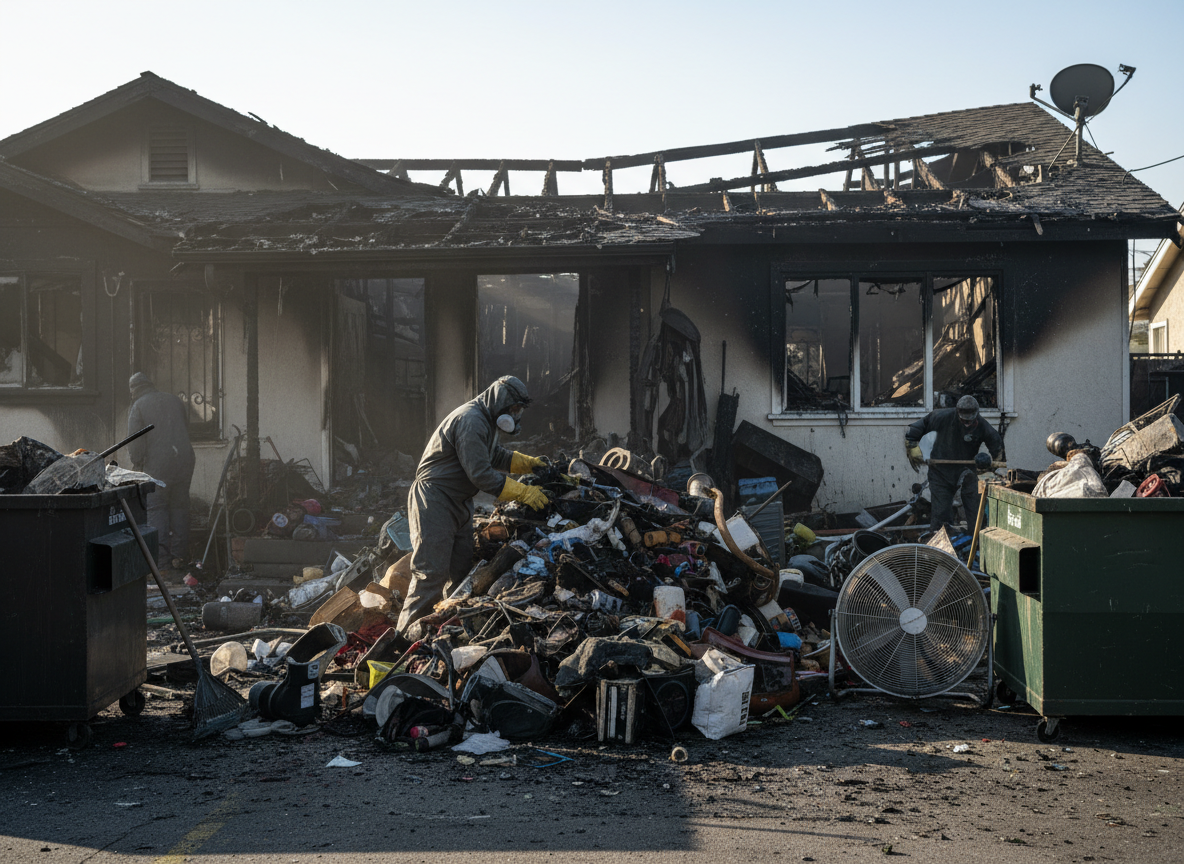
Valley Village homes built in the 1950s and 60s near Valley Village Park and Laurel Canyon Park often feature lath-and-plaster walls and tight storage spaces that trap smoke and soot after a fire. In the dry Mediterranean summers common to this part of Los Angeles, embers and smoke travel farther, pushing contaminants deep into stacked newspapers, clothing, and furniture that accumulate in hoarding situations. Technicians must separate salvageable items from those fused by heat or saturated with oily residue, working room by room to avoid collapsing piles that can hide structural damage.
North Hollywood West and nearby Studio City properties share similar construction and terrain, where mild winters keep moisture low and allow fine ash to remain airborne longer. During hoarding cleanup after fire, crews use negative-air machines and HEPA filtration to prevent cross-contamination into unaffected areas, especially when hallways are blocked by years of accumulated goods. Edge cases include hidden water lines behind stored boxes that rupture during removal or electrical wiring compromised by heat that only becomes visible once debris is cleared.
Sherman Oaks borders bring additional considerations with slightly steeper lots that affect equipment access. After initial removal, surfaces receive multiple passes of alkaline cleaners to neutralize acidic soot before any reconstruction, and all waste is tracked for proper Los Angeles County disposal. Homeowners often underestimate how far smoke travels through HVAC returns in these older single-story homes, requiring full duct cleaning as part of the process.
Technician insight
In Valley Village, the thing that catches most people out with hoarding cleanup after fire is how the dry summers let smoke and soot seep deep into the layered belongings in those 1950s ranch homes near Valley Village Park, turning what looks like surface damage into a full gut job once you start pulling items.
Blocked Hallway in North Hollywood West Home
A fire started in a detached garage and smoke entered the main house through shared walls. We found floor-to-ceiling stacks of boxes and clothing that had absorbed heavy soot. After containing the space and removing the material layer by layer, we discovered scorched subflooring hidden underneath. Once cleaned and verified, the homeowner could safely re-enter the property.
How it works
- 1
Initial Assessment
Walk the property at 12125 Riverside Dr base to map fire paths, identify hoarded zones, and note structural risks before any items are moved.
- 2
Containment Setup
Install plastic barriers and negative air machines to isolate work areas from the rest of the Valley Village home and prevent soot spread.
- 3
Layered Removal
Sort and remove debris item by item, documenting salvageable belongings while disposing of fire-damaged materials per local regulations.
- 4
Deep Cleaning
Apply specialized cleaners to walls, floors, and remaining contents, followed by air scrubbing to remove lingering odors in the Mediterranean climate.
- 5
Final Verification
Inspect for hidden damage near North Hollywood West borders and confirm the space meets safety standards before returning access.
Pricing
Pricing varies by volume of hoarded materials, fire damage depth, and access challenges in older Valley Village homes; call 24/7 for assessment.