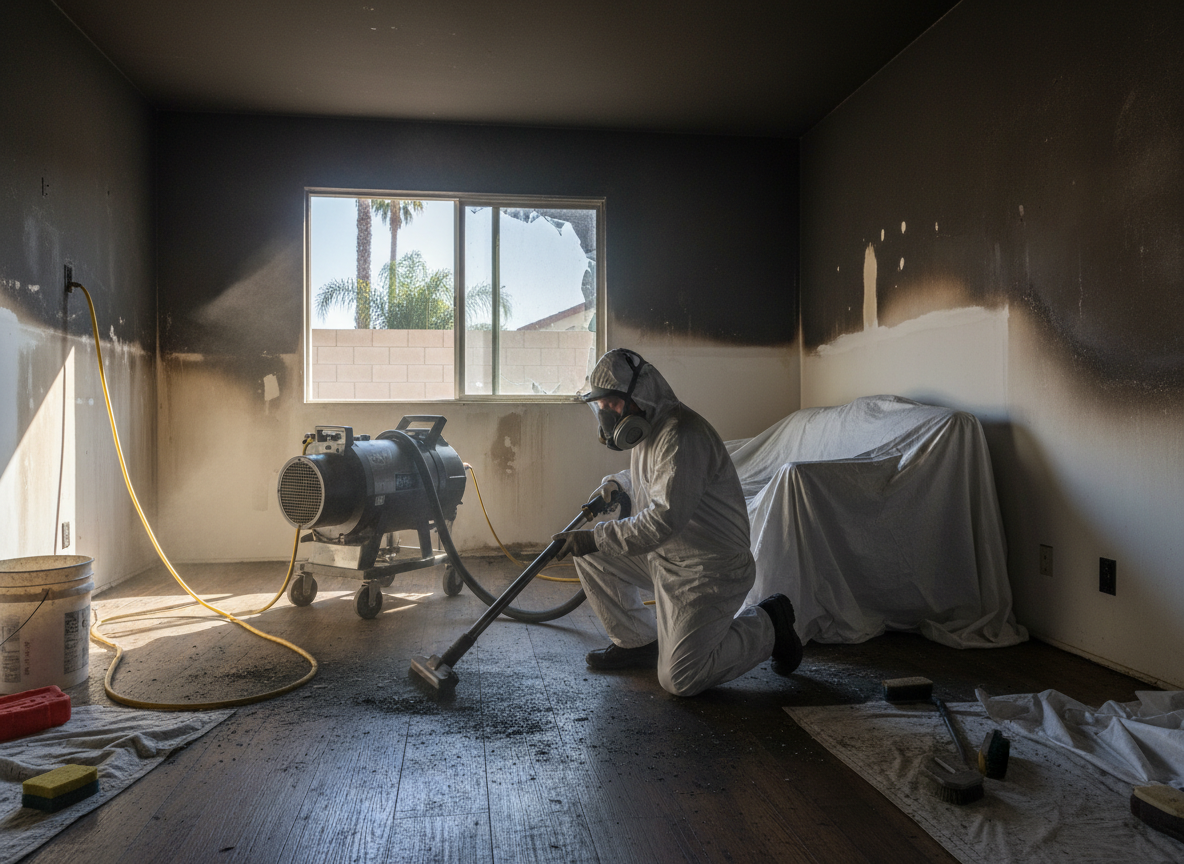
Valley Village homes built mid-century often feature stucco exteriors and lath-and-plaster interiors that trap smoke particulates deep in cavities. After a fire, the warm dry summers typical of the Mediterranean climate here allow soot to migrate further into North Hollywood West properties before restoration crews arrive. Mild winters then slow natural ventilation, leaving residual odors in Laurel Canyon Park-adjacent houses that require targeted air scrubbing rather than simple airing out.
Los Angeles County building codes require proper disposal of charred materials and verification that electrical and HVAC systems meet current standards before re-occupancy. Crews working near Valley Village Park frequently encounter hidden damage in attic spaces where embers travel along shared rooflines common in the neighborhood. Addressing these requires isolating affected sections without disturbing neighboring units in denser blocks close to Riverside Drive.
Smoke from structure fires in Sherman Oaks and Studio City can carry resins from local vegetation into Valley Village homes, bonding with drywall and carpet fibers in ways that standard cleaners miss. Technicians must test surfaces for pH levels and use specific neutralizers to prevent re-soiling once humidity rises during the cooler months. Skipping this step often leads to recurring stains weeks after initial cleaning.
Terrain around the 12125 Riverside Dr address includes gentle slopes that direct water runoff during suppression efforts toward lower-lying properties in North Hollywood West. Restoration includes extracting this introduced moisture promptly to avoid secondary mold growth in older crawl spaces typical of the area.
Technician insight
In Valley Village, the thing that catches most people out with fire and smoke damage restoration is how quickly soot bonds to the textured plaster walls in homes built before 1960 near Valley Village Park, especially when summer winds carry it from North Hollywood West. Homeowners often try wiping surfaces themselves and drive the particles deeper into the substrate.
Attic Fire Smoke Migration
A kitchen fire in a Valley Village home sent smoke into the shared attic space. Inspection revealed soot had traveled along rafters into two bedrooms facing Laurel Canyon Park. Crews sealed the attic, performed targeted cleaning of plaster surfaces, and ran air scrubbers for several days until readings cleared. The family returned without lingering odors once the dry season ventilation patterns were accounted for.
How it works
- 1
Emergency Assessment
Technicians arrive within hours to document visible and hidden fire and smoke damage throughout the Valley Village property.
- 2
Containment and Safety
Affected areas are isolated to prevent cross-contamination into unaffected rooms common in older local floor plans.
- 3
Cleaning and Odor Removal
Specialized equipment removes soot from surfaces and air while neutralizing odors that linger in the dry summer climate.
- 4
Restoration and Verification
Repairs restore the home, followed by testing to confirm smoke residues no longer remain before return to occupancy.
Pricing
Upfront written estimates provided after inspection; final cost depends on square footage affected and materials involved.