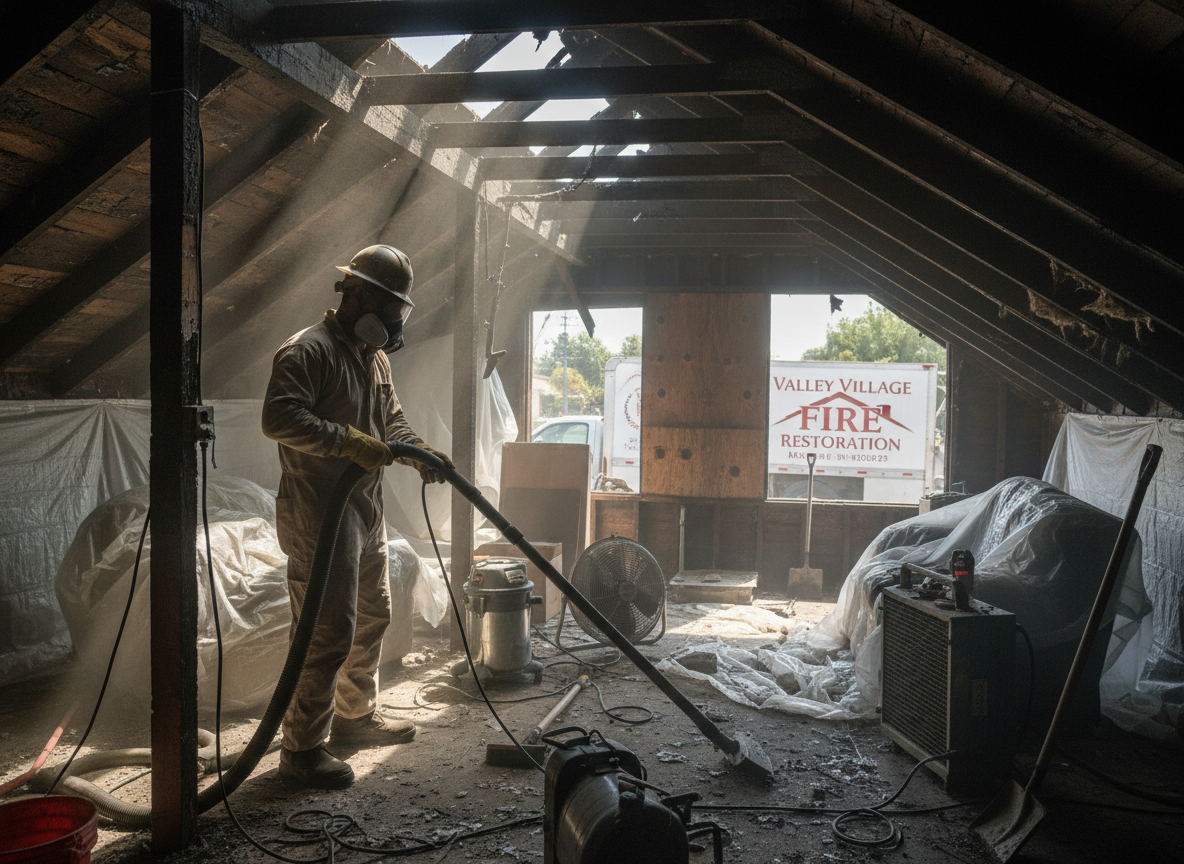
Valley Village homes built in the 1950s and 1960s often feature knob-and-tube wiring and loose-fill insulation in attics that allow fires to spread quickly during the warm dry summers typical of the Mediterranean climate here. When an electrical fault or ember from a nearby Laurel Canyon Park brush area ignites, soot travels through shared wall cavities into North Hollywood West and Studio City properties. Restoration requires removing compromised cellulose or fiberglass without disturbing intact sections that could release hidden contaminants into living spaces below.
Access in these single-story ranch houses is limited to small scuttle holes or knee-wall openings, so technicians must work from the rafters while protecting original plaster ceilings. Smoke residue on rafters and roof decking bonds differently in mild winters when humidity stays low, making alkaline cleaners necessary before any new insulation can be installed. Local building codes in Los Angeles County now require updated attic ventilation after such work, which changes how crews seal penetrations around existing HVAC ducts running to Sherman Oaks.
Edge cases include embers that travel under Spanish tile roofs common along Riverside Drive and settle in the paper backing of older batt insulation. Crews must test for residual heat days after the initial event because the dry climate keeps materials combustible longer than in coastal zones. Final clearance involves third-party air sampling to confirm no particulates remain before homeowners return to the space.
Technician insight
In Valley Village, the thing that catches most people out with attic fire restoration is how quickly smoke moves through the paper-faced insulation in 1950s homes near Valley Village Park when the dry summer air lets embers stay hot longer than homeowners expect.
Electrical Fire in Valley Village Attic
An attic fire started by outdated wiring spread soot into the insulation of a home near Laurel Canyon Park. We found settled cellulose that had allowed embers to reach the shared wall with the neighboring property in North Hollywood West. Crews removed the affected materials, cleaned the rafters, and installed new insulation with updated venting to meet current Los Angeles County requirements.
How it works
- 1
Initial Assessment
Technicians arrive from the Riverside Drive base and inspect the attic through existing access points, documenting wiring condition and smoke migration paths into adjacent North Hollywood West structures.
- 2
Containment and Safety
Plastic sheeting and negative air machines isolate the attic from living areas while crews check for structural weakening in rafters common to 1960s Valley Village construction.
- 3
Material Removal
Affected insulation and charred wood are extracted and disposed of following Los Angeles County guidelines, with care taken around original knob-and-tube wiring still present in many homes near Valley Village Park.
- 4
Cleaning and Treatment
HEPA vacuuming and alkaline cleaning remove soot from rafters and roof decking, followed by application of odor-sealing primers suited to the low-humidity conditions of the area.
- 5
Restoration and Verification
New insulation is installed to current code, ventilation is updated, and air quality testing confirms the space is safe before final walkthrough with the homeowner.
Pricing
Pricing varies with attic size, extent of hidden ember travel through older insulation, and any required ventilation upgrades in Valley Village homes.