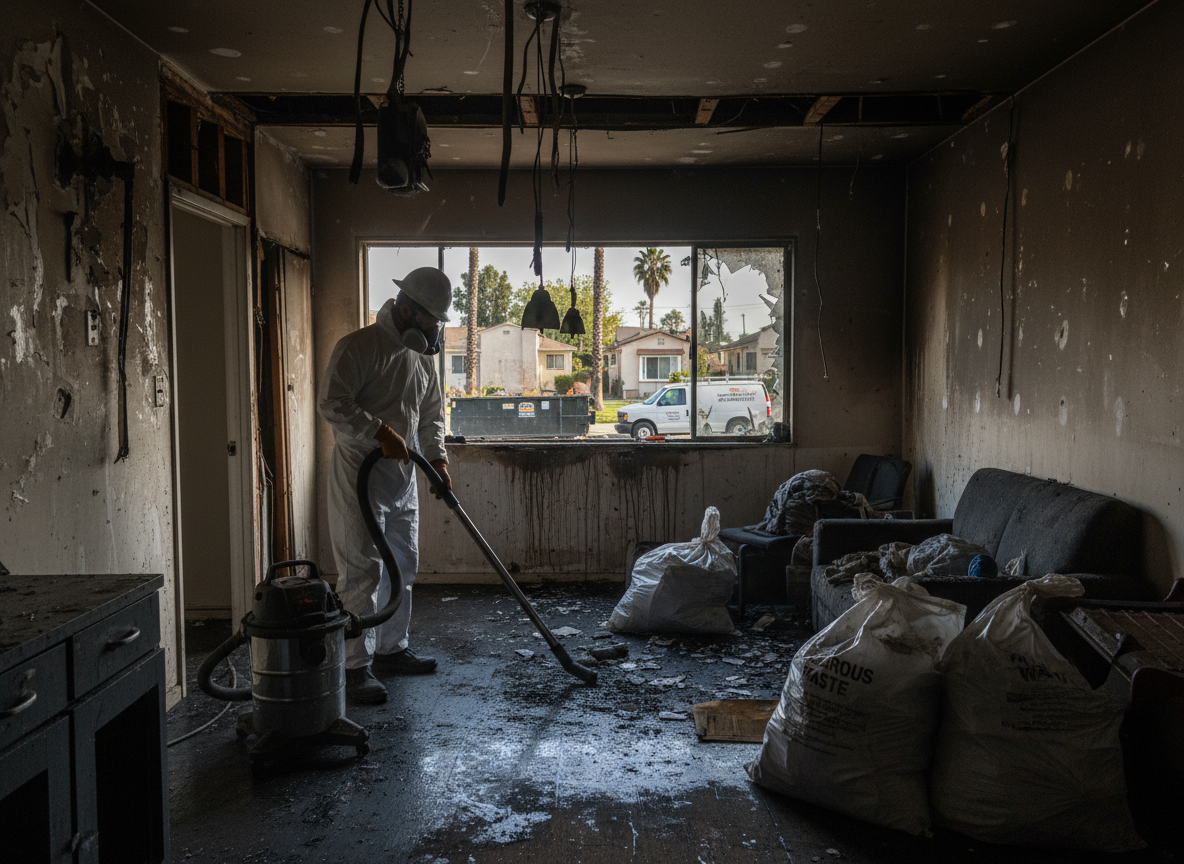
Apartment fires in Valley Village often involve older multi-unit buildings with stucco exteriors and shared HVAC systems that allow smoke to travel between units. Soot from synthetic furnishings bonds to drywall and ceiling textures, requiring HEPA vacuuming and chemical neutralization rather than simple wiping. Residue left in laundry chutes or utility shafts can re-emit odors weeks later if not addressed during the initial cleaning pass.
Mild winters and dry summers in the Los Angeles area mean apartment fires here frequently occur from overloaded window AC units or holiday decorations. Cleanup crews must coordinate with building management to access common areas without disturbing other residents, and permits from Los Angeles County may be required when structural elements are affected. Edge cases include hidden charring behind baseboards in units built before updated fire codes.
Technicians working near Valley Village Park and Laurel Canyon Park routinely deal with fine ash infiltration through single-pane windows common in the neighborhood. Proper containment using plastic sheeting and negative air machines prevents cross-contamination to unaffected apartments. Failure to document pre-existing water stains from past rains can lead to disputes with insurance adjusters later.
Final clearance testing after apartment fire cleanup includes surface pH checks and odor monitoring in closets and under sinks where smoke settles. In buildings along Riverside Drive, crews often find that electrical boxes and cable runs carry soot into neighboring units, requiring coordinated work with the property owner to avoid repeated visits.
Technician insight
In Valley Village, the thing that catches most people out with Apartment fire cleanup is how smoke travels through the shared laundry chutes and single-pane windows in buildings near Riverside Drive. Owners assume wiping visible surfaces is enough, but the dry Mediterranean summers let fine soot settle deep into carpet pads and behind outlets, forcing repeat visits if we don't pull baseboards on the first pass.
Smoke Migration Into Adjacent Units
A kitchen fire in a second-floor apartment near North Hollywood West sent soot through the building's old vent system into three neighboring units. We found residue inside HVAC returns and behind shared wall outlets that standard cleaning missed. After full containment, surface cleaning, and duct treatment, the property passed air quality testing and tenants returned without lingering odors.
How it works
- 1
Initial Assessment
Inspect the affected apartment and adjacent units for smoke paths through vents and shared walls.
- 2
Containment Setup
Install barriers and negative air machines to isolate the unit from hallways and neighboring apartments.
- 3
Soot and Residue Removal
HEPA vacuum surfaces, clean with appropriate agents, and treat porous materials like carpet and upholstery.
- 4
Odor Neutralization and Clearance
Apply odor counteractants and perform air quality checks before returning the unit to the tenant.
Pricing
Cost depends on the number of affected units, depth of soot penetration, and whether HVAC cleaning is required.