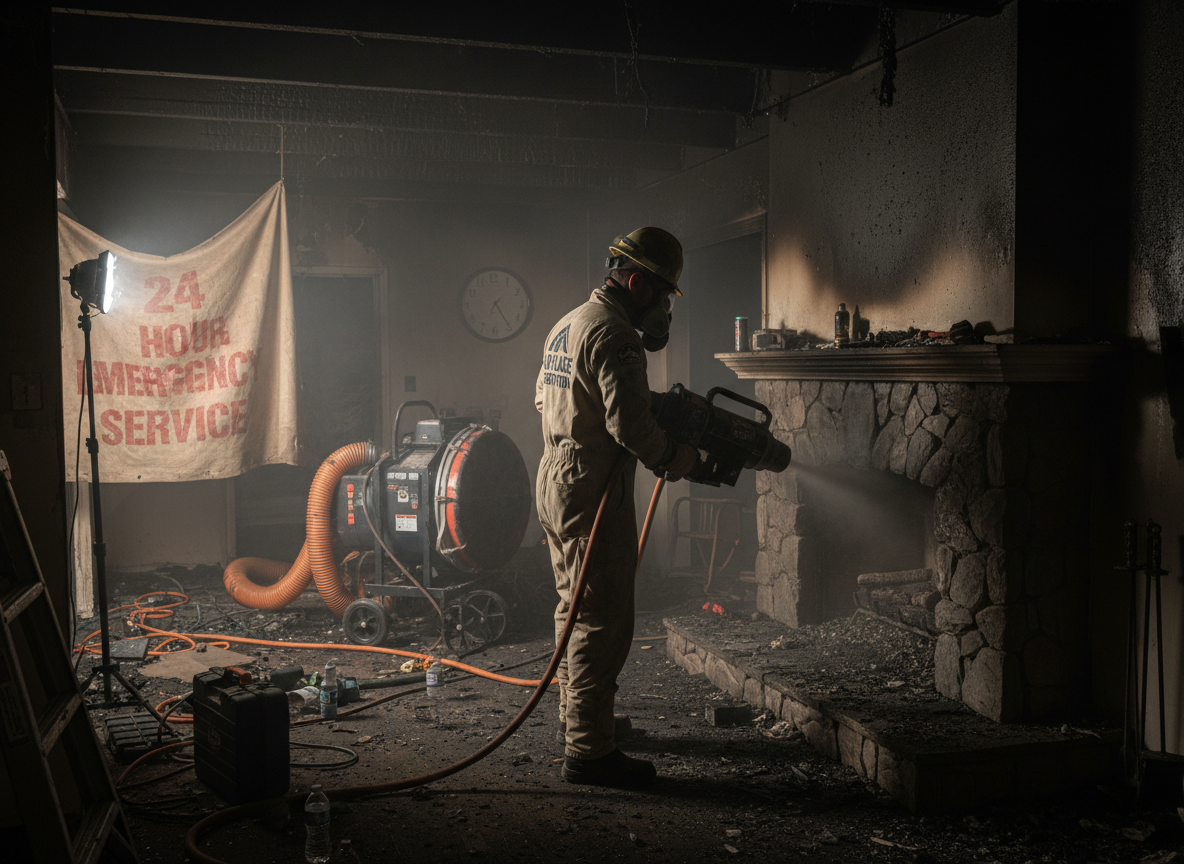
Valley Village homes built before 1970 often feature wood framing and plaster walls that trap soot deep into cavities. Mediterranean summers with low humidity let embers travel farther from Laurel Canyon Park brush into North Hollywood West backyards, requiring crews to check attic spaces and HVAC ducts before visible char appears. Los Angeles County fire codes now mandate updated smoke detector placement after any restoration, so technicians document existing wiring runs during the initial walk-through to avoid later inspection delays.
Mild winters keep moisture low inside walls, allowing alkaline soot to remain corrosive for weeks if not neutralized. Crews working near Riverside Drive routinely test pH levels on concrete slabs and hardwood floors because older Valley Village Park residences sit on raised foundations where airflow carries residue into crawl spaces. Quick 24 hour arrival prevents secondary staining on textured ceilings common in Sherman Oaks border homes.
Portable air scrubbers must run continuously for days in these single-story layouts because closed floor plans trap odors longer than newer tract homes in Studio City. Technicians also verify that electrical panels have not been compromised by heat traveling through knob-and-tube wiring still present in some blocks west of Laurel Canyon Boulevard.
Technician insight
In Valley Village the thing that catches most people out with 24 hour fire restoration is how quickly smoke travels through the original knob-and-tube wiring runs in pre-1960 homes near Valley Village Park; once it reaches the attic it drops into every room through ceiling vents that newer homes do not have.
Attic Ember Intrusion After Wind Event
A small brush fire ember entered an older single-story home west of Laurel Canyon Park through an attic vent. Inspection found soot coating rafters and inside wall cavities that had migrated to the living room. Crews contained the space, neutralized surfaces, and cleaned the HVAC before reinstalling insulation. Homeowners returned within five days with no lingering odor.
How it works
- 1
Immediate Site Assessment
Technician arrives within hours, documents all affected rooms, tests for hidden smoke migration through HVAC and attics, and secures the property against further ember intrusion.
- 2
Containment and Odor Control
Plastic barriers and negative air machines isolate damaged zones while HEPA filtration begins pulling airborne particulates before they settle deeper into plaster and carpet.
- 3
Soot Removal and Cleaning
Specialized sponges and degreasers treat surfaces room by room; contents are inventoried, cleaned off-site when possible, and returned after verification that pH levels are neutral.
- 4
Final Clearance and Documentation
Air quality readings and visual inspection confirm no residual odor; report prepared for insurance and Los Angeles County building department review if structural repairs are needed.
Pricing
Upfront written quote provided after on-site inspection; final cost depends on square footage affected and hidden damage discovered during cleaning.